Compare W Cut vs D Cut Non Woven Bags to find the best option for your business. Learn key differences, benefits, and ideal uses in this easy guide.
When choosing eco-friendly packaging, businesses often compare W Cut vs D Cut Non Woven Bags to find the best option. Both types offer unique benefits in terms of strength, cost, and usability. Understanding the difference helps businesses select the right bag for branding and daily use. Each style has its own perks, and your choice can shape everything from your brand’s reputation to how easy the bag is to use.
Let’s clear things up. This guide covers what sets W Cut and D Cut bags apart, their standout features, and when each one works best—so you can pick wisely.
What Are W Cut vs D Cut Non Woven Bags?
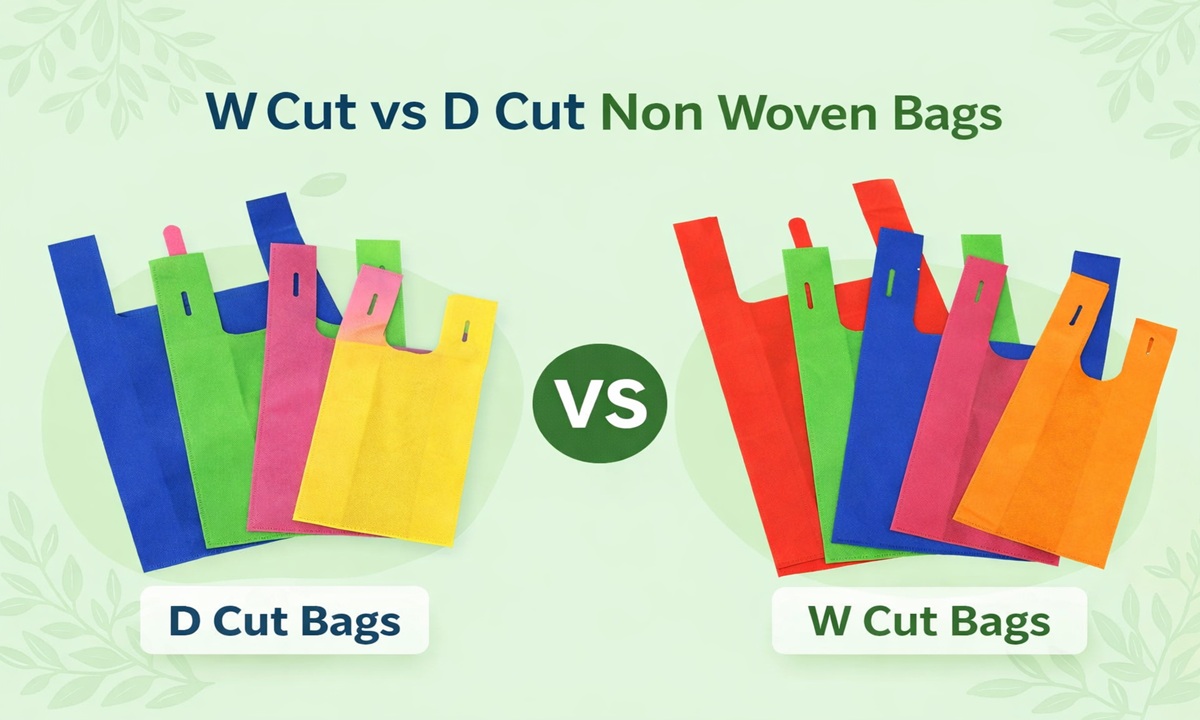
D Cut bags feature a die-cut handle directly on the bag, making them lightweight and easy to carry. They are widely used in retail stores, exhibitions, and promotional events.
Key Features:
- Built-in handle (no stitching required)
- Cost-effective and lightweight
- Easy to stack and distribute
These bags work best for low to medium weight items.
What Are W Cut Non Woven Bags?
W Cut bags, also known as vest-style bags, have two extended handles that form a “W” shape. They offer better strength and are commonly used in supermarkets and grocery stores.
Key Features:
- Strong handle support
- Higher load capacity
- Comfortable for carrying heavier items
Ideal for daily grocery and heavy-duty use.
Key Differences Between W Cut vs D Cut Non Woven Bags
Many businesses prefer W Cut Non woven Bags vs D Cut Non Woven Bags based on their specific packaging needs.
| Feature | D Cut Bags | W Cut Bags |
|---|---|---|
| Handle Type | Die-cut handle | Vest-style handles |
| Strength | Moderate | High |
| Cost | More affordable | Slightly higher |
| Usage | Retail, promotions | Grocery, supermarkets |
| Comfort | Basic | More comfortable |
Which is Better: W Cut vs D Cut Non Woven Bags?
Many businesses prefer W Cut vs D Cut Non Woven Bags based on their specific packaging needs. The right choice depends on your business needs.
Choose D Cut Bags if:
- You want cost-effective branding
- You need lightweight packaging
- You run retail or promotional campaigns
Choose W Cut Bags if:
- You deal with heavier products
- You need durable and long-lasting bags
- You run a grocery or supermarket business
In short, D Cut is for branding, W Cut is for strength.
Business Benefits of W Cut vs D Cut Non Woven Bags
Both bag types offer strong advantages for businesses:
- Eco-friendly and reusable
- Cost-effective compared to plastic
- Custom printing for branding
- Improves brand visibility
Moreover, customers prefer brands that use sustainable packaging. As a result, switching to non woven bags builds trust and loyalty.
Making the Right Choice
Many businesses prefer W Cut Non woven Bags vs D Cut Non Woven Bags based on their specific packaging needs. Your pick—W Cut or D Cut—comes down to what you need: lighter branding or tougher carrying power. D Cut fits best for lightweight packaging and promotions, while W Cut shines for everyday, heavy-use needs. According to environmental studies, reusable bags help reduce plastic waste
Not sure which to go with? Honestly, a lot of businesses keep both on hand. Branding and strength—sometimes you really can have it all.
FAQs
1. Which is better for business use: W Cut or D Cut Non Woven Bags?
If your business focuses on branding and promotions, D Cut bags are a better choice. However, for carrying heavy products, W Cut bags offer more strength and durability.
2. Can both W Cut and D Cut bags be customized with logos?
Yes, both types support high-quality printing. However, D Cut bags provide a smoother surface, making them slightly better for detailed branding.
3. Which bag is more cost-effective for bulk orders?
D Cut bags are usually more affordable, making them ideal for bulk promotional use.
4. Are W Cut Non Woven Bags suitable for grocery stores?
Yes, W Cut bags are widely used in supermarkets because they can carry heavier items comfortably.
5. How do non woven bags help in eco-friendly branding?
Non woven bags are reusable and reduce plastic waste. As a result, they improve your brand’s eco-friendly image and customer trust.
Moreover, both bag types support eco-friendly practices. In addition, they help businesses reduce plastic usage. As a result, companies build a stronger and more responsible brand image.