

Blog
How Non-Woven Bags Are Made: A Simple Step-by-Step Guide


Non-woven bag manufacturing is a modern process that turns plastic pellets into strong, reusable shopping bags. You’ve definitely grabbed a non-woven bag—maybe at the grocery store, or that pharmacy down the street. But have you ever stopped to wonder how these tough, reusable bags actually come together? I get this question all the time from business owners who want to know exactly what they’re buying before placing a big order. So let’s break it down, step by step, right from those tiny plastic pellets to the bag you toss in your trunk.
It’s actually a lot more interesting than it sounds, promise.
What’s Inside These Bags, Anyway?
Let’s start with the basics. The main stuff inside non-woven bags is polypropylene (PP). Yeah, it’s plastic—I know, that probably sounds odd if you’re thinking “eco-friendly.” But hang on. These aren’t the same as those flimsy, single-use bags that pile up in landfills. Non-woven bags are strong, you can use them hundreds of times, and they’re totally recyclable. So, big difference. Sometimes, manufacturers use polyester (PET) too, especially recycled PET from old plastic bottles, which makes them even greener.
Non-Woven Bag Manufacturing Process Explained
Step 1: Non-Woven Bag Manufacturing: Melting the Raw Material
Here’s where things get hot. Those little plastic pellets go into a giant hopper, and get heated up to about 500 degrees Fahrenheit. No joke—it’s scorching. The pellets melt into a thick, syrupy liquid. That’s the base for everything else.
The cool thing is, this part (called melt spinning) is actually pretty clean. There aren’t any nasty chemicals or dyes used at this point, which keeps things a lot more eco-friendly than you’d expect from most fabric production.
Step 2: Spinning Out the Fibers
Once the polypropylene is all melted, it gets forced through a spinneret. Imagine a giant shower head with tons of tiny holes. The liquid plastic squirts out, forming long, thin strands. It’s kind of like making spaghetti, just way hotter and faster. These strands cool down as they hit the air and become fibers.
Now, instead of weaving these fibers together like traditional cloth, they’re randomly spread out on a moving conveyor. This forms a big sheet, or “web.” Weirdly enough, this random layout is what makes the fabric so strong in every direction.
Step 3: Bonding the Fabric
At this point, you’ve got a web of fibers, but they’re just sort of lying there. They need to stick together. That’s the “non-woven” part.
There are a few ways to do this:
Heat bonding
Hot rollers press the fibers, melting them just enough to fuse together. It’s fast, strong, and gives most non-woven bags their smooth look.
Chemical bonding
Adhesives can glue the fibers together. Not as common for bags, but it’s used sometimes.
Mechanical bonding
Needles punch through the fabric over and over, tangling everything up. This creates a softer, more textile-like material.
After bonding, you’ve got finished non-woven fabric, rolled up in massive, heavy rolls—seriously, some of these things are as wide as a car.
Step 4: Cutting and Shaping
Now we’ve got the fabric, but it’s just one giant sheet. Time to turn it into bags.
Manufacturers load the rolls onto automatic machines that cut out the bag shapes—rectangles for basic D-cut bags, or more complicated patterns for fancy styles. These machines use ultrasonic or laser cutters for crisp, clean edges. That’s important, because any mistake means wasted material, and nobody likes waste.
Step 5: Printing and Customizing
Here’s where you get your logo or design. Before assembling the bags, most companies print directly onto the flat fabric. There are a few main printing methods:
Screen printing
Perfect for bold, simple designs with just a few colors. Fast and great for big orders.
Flexographic printing
Handles multiple colors and detailed images. Most pros use this for sharp, high-quality branding.
Heat transfer
Best for full-color photos or images. The design gets printed on special paper, then pressed onto the bag with heat.
Printing happens while the fabric is still flat, so designs come out sharp and last longer.
Step 6: Non-Woven Bag Manufacturing: Bag Assembly Process
This is where those flat sheets of fabric finally turn into real bags. The way you put the bag together depends a lot on what style you’re making.
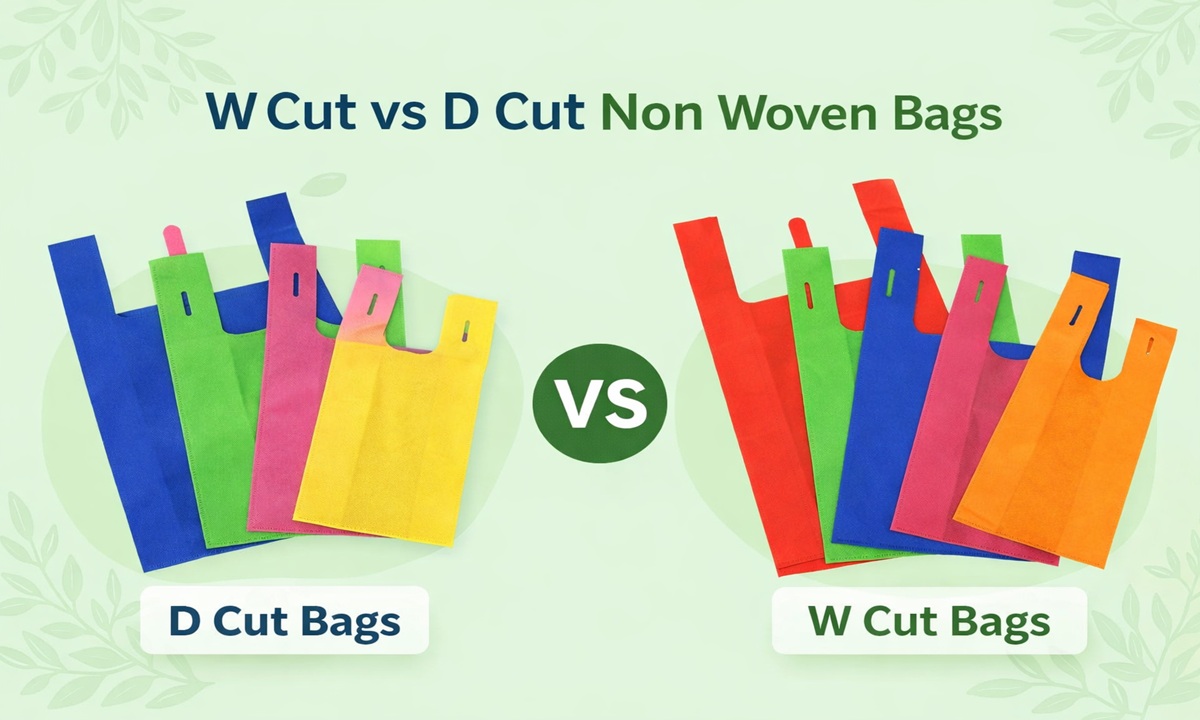
Simple bags (D-cut or W-cut)
Take simple bags like D-cut or W-cut. Here, the steps are pretty quick:
- Fold the fabric.
- Seal the sides with ultrasonic welding—no sewing required.
- Punch out the handle holes.
- Seal and reinforce everything.
Fancy bags (loop handle or box bags)
For bags that are a bit fancier, like loop handle bags or box bags, the process gets a little more involved:
- First, make the handles from fabric strips.
- Attach the handles using ultrasonic welding.
- Add gussets—the folded-in sides.
- Seal the bottom for extra strength.
- Sew or weld everything together so it holds up.
The ultrasonic welding is pretty neat. It uses high-frequency sound waves to melt the plastic, fusing the fabric without any thread or glue. That means strong, tidy seams every time.
Step 7: Quality Control
Before any bags leave the factory, they go through quality checks. Good manufacturers never skip this. What do they look for?
- Any holes or rips in the material.
- Weak seals or loose handles.
- Print quality—is the logo crisp and in the right spot?
- Total strength—can the bag actually carry what it’s supposed to?
Some places check every 100th bag, just to spot-check. Others, like us at Go Green Non-Woven Bags, inspect every batch to catch problems early. If a bag doesn’t pass, it goes straight back to be recycled into pellets and made again. Nothing gets wasted.
Step 8: Packaging and Distribution
Once the bags pass inspection, workers count, stack, and pack them into boxes. Usually, they pack them in groups of 500 or 1,000, depending on size. Then it’s time to seal up the boxes, label them, and ship them out to stores, businesses, or distributors.
From start to finish—from raw pellets to packed boxes—this whole process can take a few days or, for big custom orders, maybe a couple weeks.
Different Types Mean Different Processes
Not every non-woven bag comes together the same way. Here’s how it changes:
D-Cut Bags
These are the simplest. Cut, fold, seal, punch the handle holes, and you’re done. Fastest to make.
W-Cut Bags
Pretty much like D-cuts, but the handle shape means you need a special cutting die.
Loop Handle Bags
A bit more work. Handles get made separately and welded on. Takes longer, but you end up with a sturdier, more premium bag.
Box Bags
These have those boxy shapes thanks to gussets on the sides and bottom. That means extra cutting, folding, and sealing.
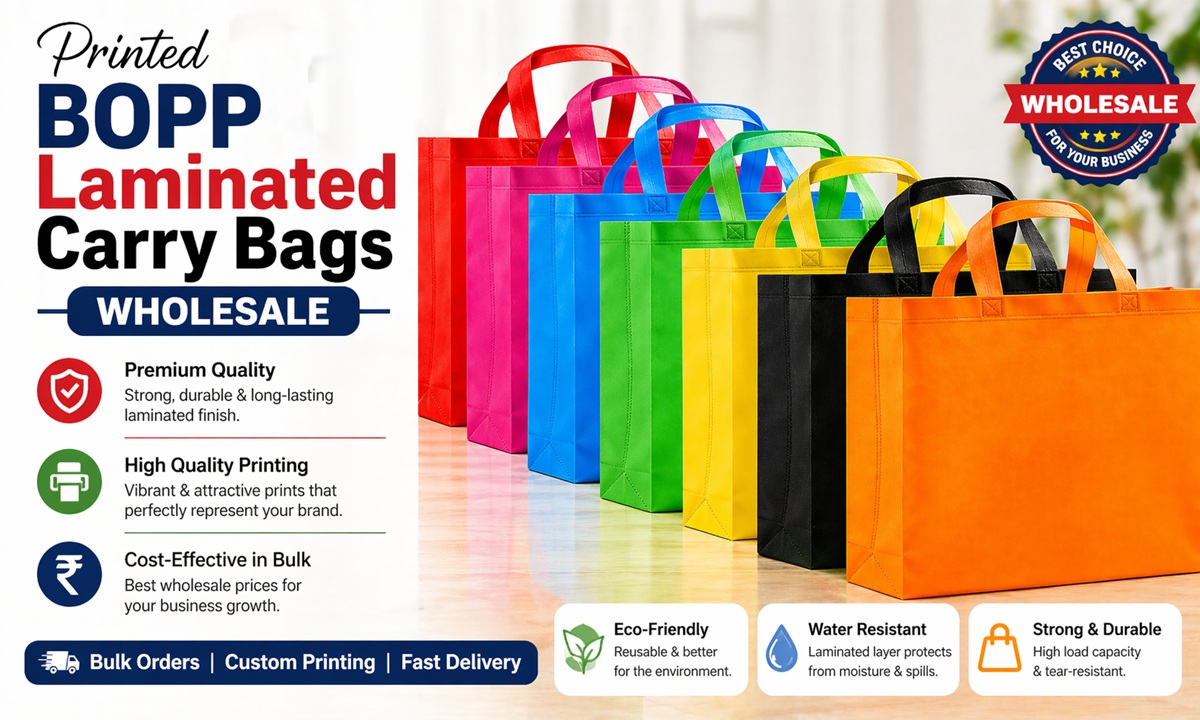
Laminated Bags
Here, a thin plastic film gets added to the fabric for water resistance—great for food packaging.
So, depending on what kind of bag you want, the steps change a bit. But it all comes down to smart design and careful assembly.
What Makes a Good Non-Woven Bag?
So, you’re shopping for non-woven bags and want something that actually lasts. Here’s what sets the good ones apart from the cheap knockoffs:
First, check the GSM — that’s just the fabric weight. A sturdy bag usually has 70-90 GSM. If you see anything in the 40-50 range, skip it. Those tear if you just look at them wrong.
Next up, bonding. Run your fingers along the seams. Do they feel solid? Or are they flimsy and uneven? Cheap bags usually have weak ultrasonic welds that split open the moment you load them up.
Handles matter, too. Give them a tug. If the handles feel shaky or like they might rip off, walk away. Most bag fails start right there.
And then there’s the print. Is the logo crisp? Or does it look like it’ll fade after a couple trips to the grocery store? Good bags hold onto their prints for ages.
The Environmental Side
People always ask: “If non-woven bags are made of plastic, how can they be eco-friendly?”
Here’s the deal. Those thin plastic bags at the checkout? You use them once, toss them, and they stick around in landfills for centuries. Non-woven bags are different. You can use one hundreds of times before it wears out. When it does, it can be recycled and turned into new bags or other stuff.
Plus, making these bags uses less water and fewer chemicals than making cotton ones. They’re light, so shipping them around the world burns less fuel, too.
Are they perfect? Not quite. But they’re a huge step up from single-use plastic.
What’s Next for Non-Woven Bags
The industry keeps moving forward. Some manufacturers are starting to use plant-based polypropylene, not just oil-based. Others are making bags out of recycled ocean plastic.
Factories are getting smarter, too. AI-powered quality checks can catch flaws way faster than humans ever could.
Printing keeps improving — brighter colors, sharper details, and prints that don’t fade even if you drag the bag everywhere.
Why This Stuff Matters
If you’re a business owner ordering these bags, knowing what goes into them makes all the difference. You’ll know the right questions to ask your suppliers. You’ll understand why some specs cost more. You won’t get stuck with bags that fall apart after a week.
And when a customer asks, “Are these really eco-friendly?” you can actually explain how and why.
Final Thoughts
Final Thoughts on Non-Woven Bag Manufacturing
Non-woven bag manufacturing continues to evolve with smarter technology and more sustainable practices. As demand for reusable packaging grows, the non-woven bag manufacturing industry plays an important role in helping businesses adopt eco-friendly solutions without sacrificing quality or durability.
Making non-woven bags is a blend of science, engineering, and practical design. Every stage of the non-woven bag manufacturing process — from melting raw materials to cutting and sealing the finished bag — directly impacts the strength and performance of the final product.
Understanding non-woven bag manufacturing helps businesses choose reliable, high-quality packaging that supports sustainability goals. A well-executed manufacturing process ensures bags that are strong, cost-effective, and environmentally responsible for long-term use.