

Blog
Eco-Friendly Packaging Trends in India 2026: The Smart and Urgent Shift to Non-Woven Bags.


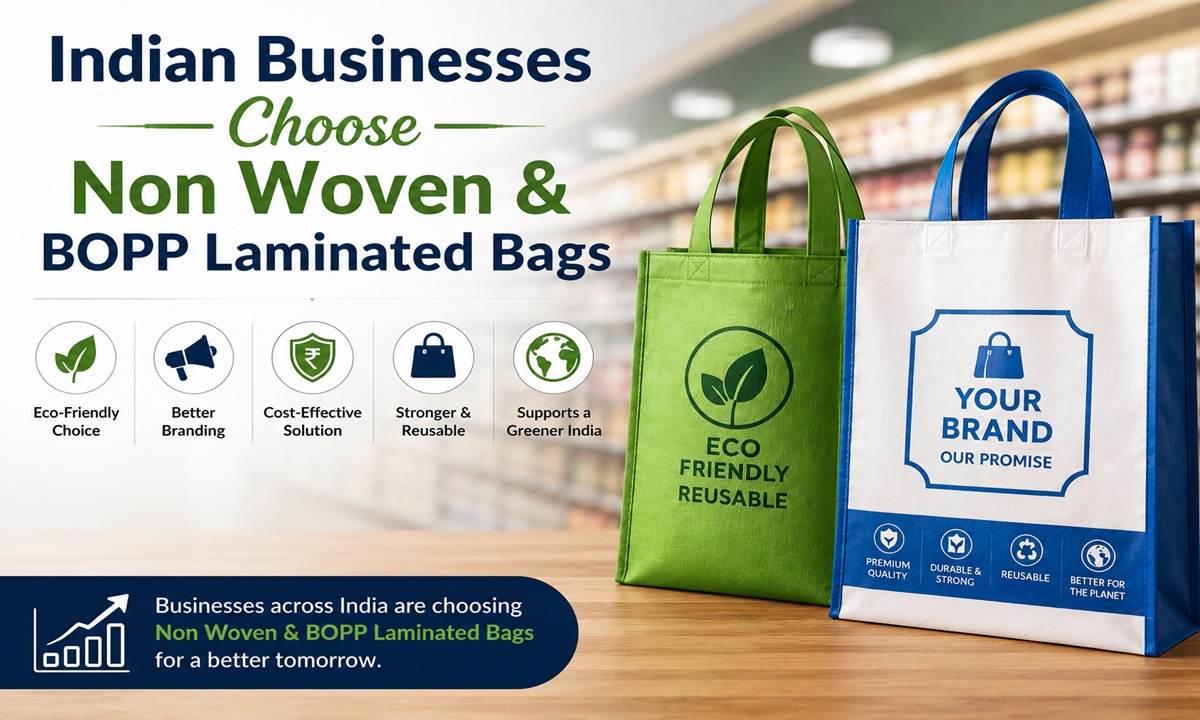
If you own a business in India right now, you have probably noticed something. Plastic bags are quickly vanishing from any respectable retailer, pharmacy, or even the grocery store down the street. People are replacing them with bright, long-lasting non-woven bags that everyone seems to be using. Eco-Friendly Packaging Trends are becoming impossible to ignore for businesses in India. If you own a business in India right now, you have probably noticed something.
Also, it’s not a coincidence. There will be a big change in 2026, and if you don’t pay attention, you might have to hurry to stay up.
Eco-Friendly Packaging Trends: The Real Reason Behind This Sudden Shift.
This is the issue. The Indian government is done messing around with plastic. They are now genuinely enforcing the ban on single-use plastics that they put in place in 2022. That is, really enforcing it. No one wants to cope with the trouble of getting fined if they are caught using plastic bags.
But it’s more than just avoiding fines. Your customers are also shifting. People really do care about where their packaging goes. They have questions. Customers are choosing stores that utilize eco-friendly bags over those that don’t. These choices that appear small build up.
Market data backs this up. It reveals that India’s green packaging industry is growing quickly and is expected to be worth USD 57.2 billion by 2033. That’s a lot of growth, and everyone wants it to happen, from the government to regular people.
Why Non-Woven Bags Lead Eco-Friendly Packaging Trends.
There are several eco-friendly choices, such as paper, jute, and cloth bags. But what about non-woven bags? They are reaching the sweet spot that makes them great for most enterprises.
Think about it. Paper bags can easily tear, especially when they get damp. Cloth bags are great, even when they cost a lot. You can’t use plastic. What do you do now?
Non-woven bags answer all of these problems. They are light enough to ship cheaply, strong enough to store heavy groceries, and yes, they look fantastic. You may add them to your brand by printing your logo on them and choosing different colors.
The nicest aspect is that they don’t cost too much. If you buy a lot, each bag will cost between ₹7 and ₹12. That’s not as expensive as most people imagine. Your clients will also keep seeing your brand because they will use them again.
Who Is Already Using Them?
A lot of people, really. Big retail chains were the first to use this tactic, but now small firms are doing the same.
The drugstore near you? most likely using them. That shop for garments on the other side of the street? The same thing. Even candy stores have found that laminated versions are best for mithai boxes.
E-commerce companies love them since they are light and lower shipping expenses. Restaurants are also utilizing them for takeout orders since they are strong and don’t fall apart as paper bags do when you put hot food in them.
What Does It Do for Your Business?
Okay, let’s talk about real things. Why is it so vital to convert to non-woven bags?
First of all, there won’t be any fines. That’s clear. But there’s more to it.
Your clients will like you more. Yes, I know it sounds easy, but it’s true. When you choose eco-friendly packaging, people notice. They might not say anything, but they know. Also, that little thing can make a difference when consumers have to pick between two stores that are very comparable.
Next comes the branding angle. Every time someone walks around with your bag, it’s free advertisement. Plastic bags are thrown away right away, but non-woven bags last longer. They can be used for a lot of things, like transporting books, shopping, and workout clothes. They also look good with your logo.
You’re really saving money in the long term. Yes, they might cost a little more up front than plastic did, but when you add in the cost of compliance, consumer goodwill, and the fact that you don’t have to continually ordering new bags since people keep using the same ones, it all adds up.
The Last Score
This is what I think will really happen in 2026. This isn’t just a fleeting trend. The government has put a lot of money into it. 1.41 lakh crore rupees to get rid of plastic and manage garbage in cities.
Customers are in. People don’t think they have to give up convenience for sustainability anymore because the other options are now good enough.
And what about businesses? They are starting to understand that this isn’t charity work. It’s just smart business.
Non-woven bags are presently the most popular choice since they work. They are practical, not too expensive, and make your business look better. What else do you need?
If you haven’t already, you should switch in 2026. The suppliers are ready, the infrastructure is in place, and your competitors are probably already doing it.
The question isn’t whether eco-friendly packaging is the way of the future. It’s here now. The question is whether you will take part in it or fall behind.